 Chad Keates
 Archives

This list is in no particular order and is based on what I have seen inside or very close to Grahamstown. Boomslang (Dispholidus typus typus) Size: 1.2-1.5m. Habits: Diurnal snakes which are found in a large variety of habitats, most commonly in trees and shrubs, but may descend to the floor to bask or find food. Diet: Chameleons, frogs, tree-living lizards, birds and occasionally rodents. Danger to man: The boomslang possesses a very dangerous haemotoxic venom… Read More
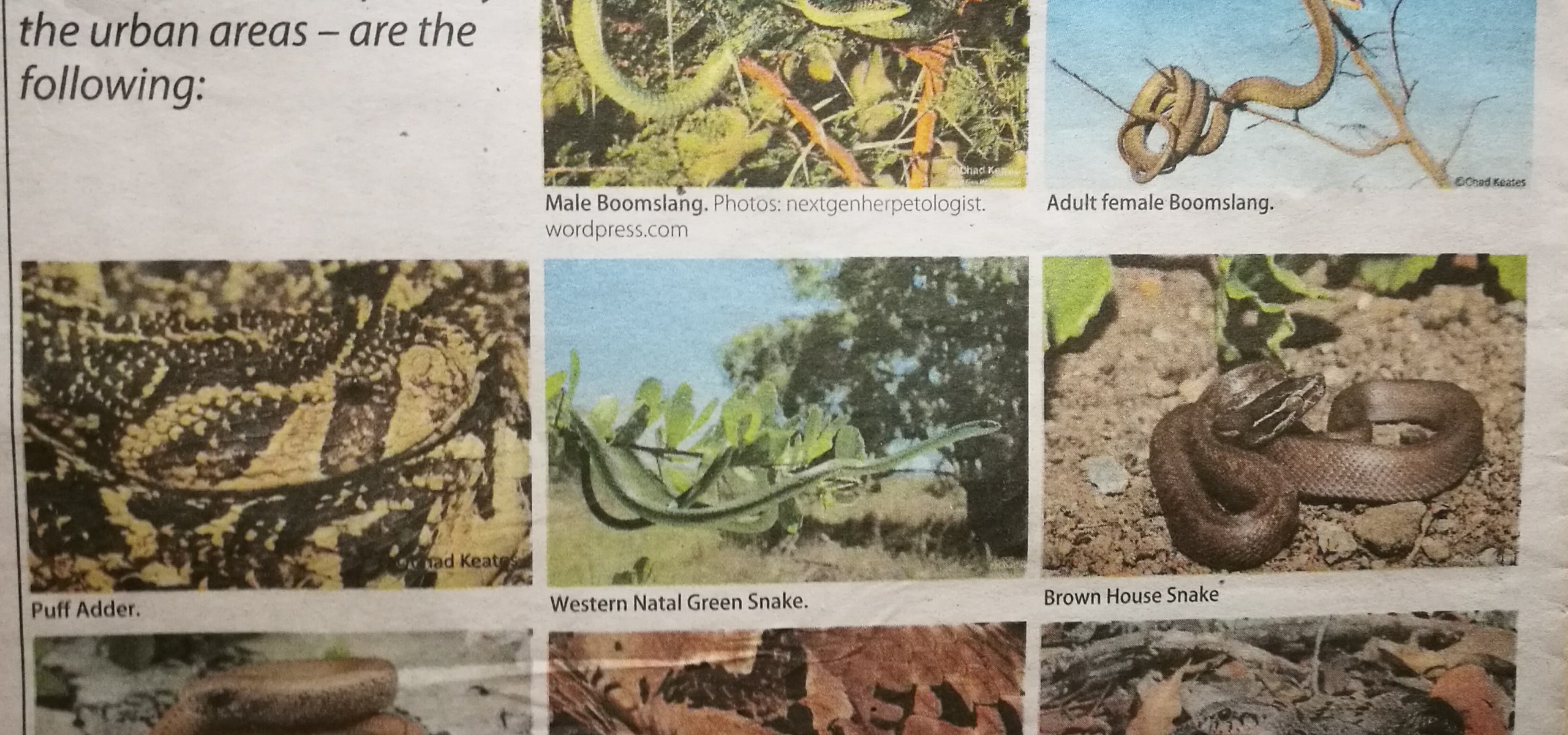
Recently I was contacted by a Rhodes journalism student who was in the process of completing an article about snakes for the Grocotts Mail. Although strange to admit, given my current path as a MSc zoology student focusing on snake genetics, I was once in her shoes, completing my hours at the Midrand Reporter in pursuit of my second year Rhodes Journalism and Media Studies credit. Although I am very much a ‘science kid’ now, I… Read More

So as I am sure you have you gathered, I could not let the little ‘sheep stabbers’ go. Instead of just finishing my honours and leaving the skaapstekers in my rear view mirror, like I did with the painted reed frogs, I decided to continue on studying the snake with the addition of everyone else in the genus. Unlike with my honours, my masters will investigate the entire genus which is ‘currently’ six… Read More

So although I started last year, and even though I have a lot… I mean a lot to learn about reptile photography, I am happy to say that I placed third in this years department photo competition. My picture of the two very cute brown-backed tree frogs now hangs on the wall, in the foyer of the Zoology and Entomology Department, amidst the other photos which placed in the top three for… Read More


This list contains all the water snakes that can be found in and around water in the Grahamstown area. As the names suggest, this means that these snakes are usually found in close proximity to water because of their diets that mostly consist of frogs, tadpoles and fish. Although not as closely related to water as the other snakes on this list, the red-lipped herald has been listed at the end because it is closely associated with… Read More

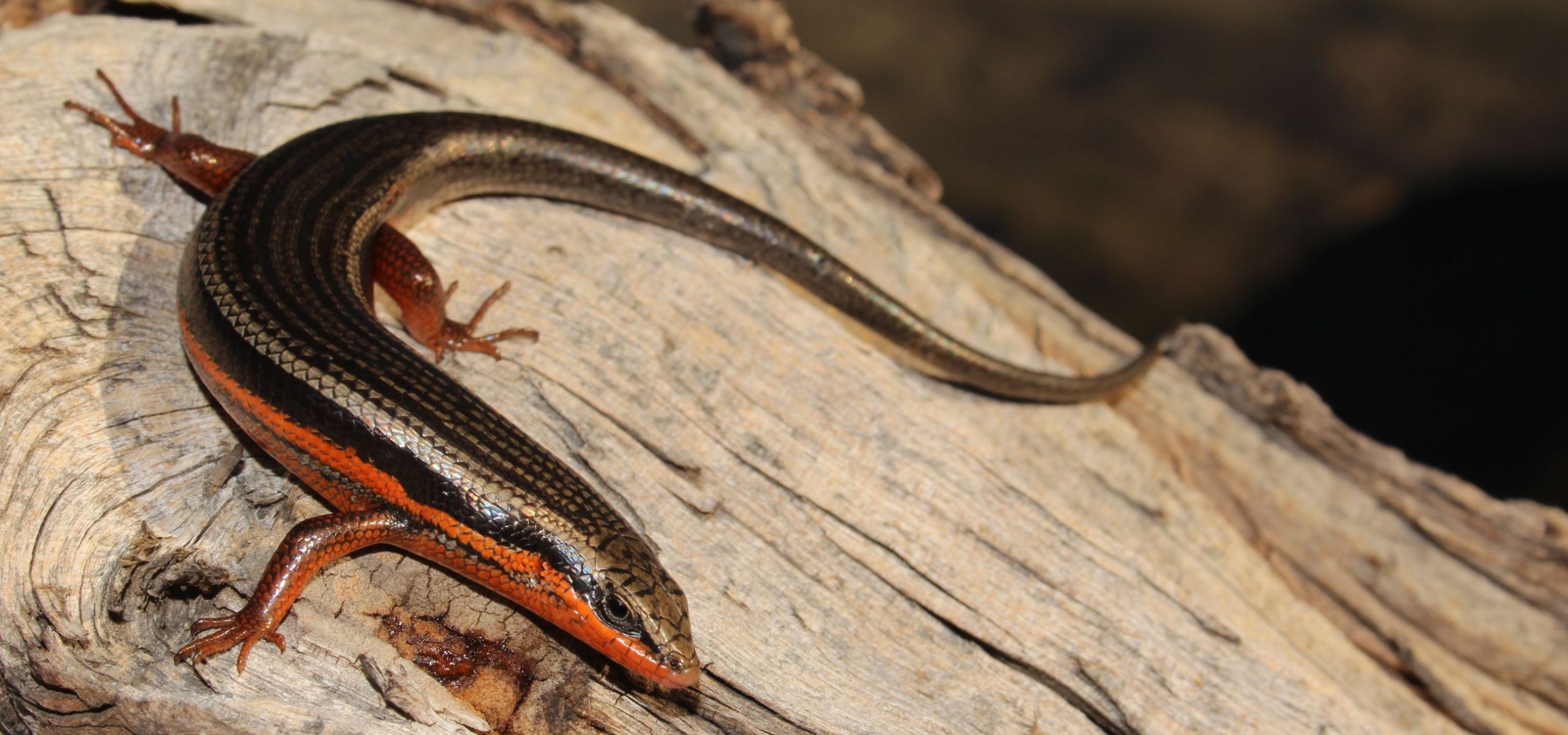
Listed below are the skinks that you are most likely to see or find in and around Grahamstown. Family: Scincidae The Scincidae family is considered the most species-rich lizard family in the world. In South Africa, Lesotho and Swaziland combined, there are 59 recognized species and several subspecies. Skinks are characterized by shiny overlapping scales and a cylindrical, robust body. Most skinks also feed on invertebrates and irrespective of whether they have limbs or not,… Read More




 Chad Keates